
The journal
What are the three types of Kanban? Practical guide for small teams
project management kanban vs to do list: learn the three Kanban board types and when each one is the right fit for small teams.
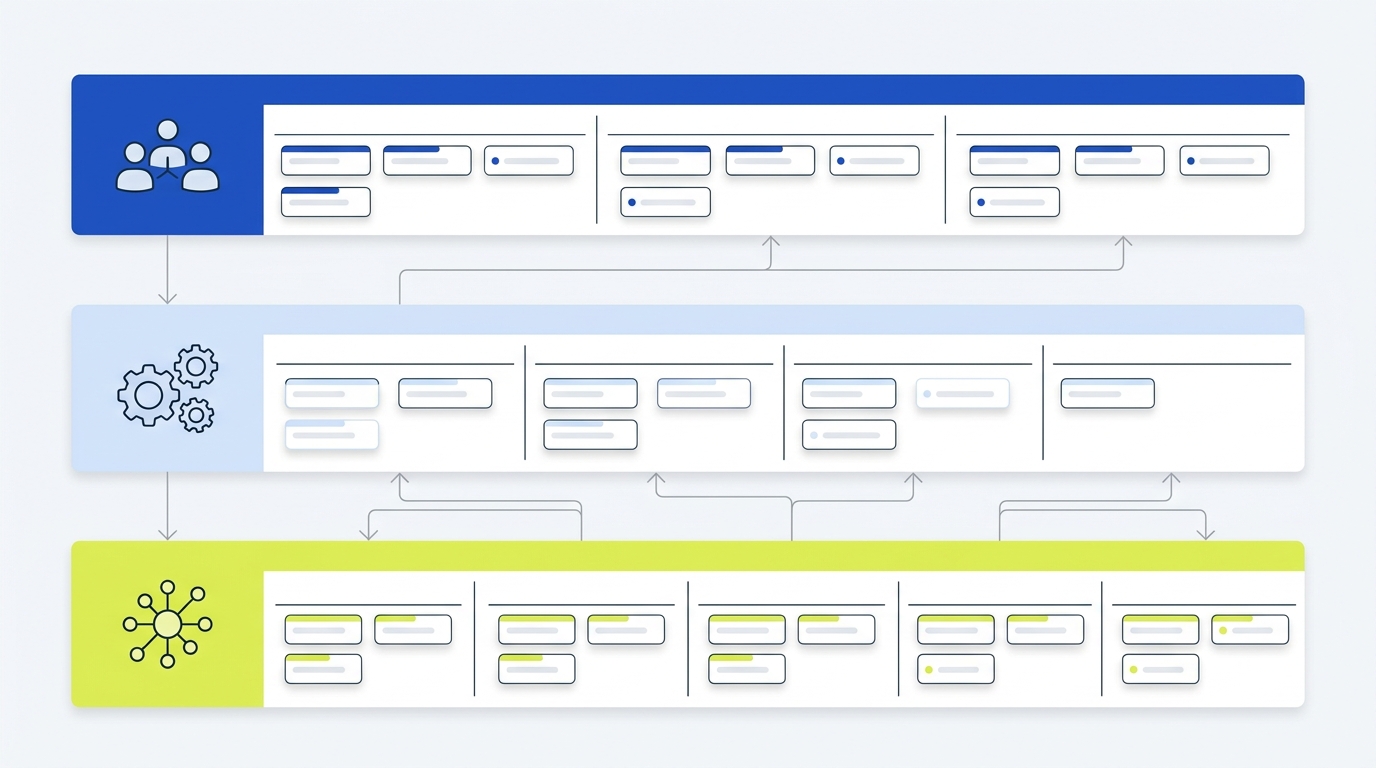
Quick answer: the three types of Kanban and why it matters
The three common Kanban board types are Team Kanban, Service or Operational Kanban, and Portfolio Kanban, each matching a different scope of decision making: team tasks, ongoing service delivery, and strategic initiatives respectively. This is a practical distillation of Kanban as a method for visualizing workflow, limiting work in progress, and improving flow through explicit policies and feedback loops, which are the foundations small teams use to steady delivery and expose bottlenecks The Kanban Guide.
Team Kanban focuses on an individual team, its end to end workflow and its day to day pull system. Service or Operational Kanban brings service level thinking, classes of service and expectations driven by cycle time data. Portfolio Kanban elevates the view to epics and initiatives and governs selection and WIP at the portfolio level to connect strategy to delivery Kanban University overview.
What are the three types of Kanban?
The three common types are Team Kanban for a single teams workflow, Service or Operational Kanban for continuous service delivery with classes of service, and Portfolio Kanban for visualizing and governing multiple initiatives across teams.
For a quick rule of thumb: use a Team Kanban board when a single team is delivering work items end to end, use Service Kanban when a team or group manages ongoing requests and priorities, and use Portfolio Kanban when you need to visualize and govern multiple initiatives across teams. Each type shares the same Kanban principles but applies them at a different decision level and scope The Kanban Guide.
Choosing the right type matters because it changes which decisions the board helps you make. A team board optimizes day to day flow and predictability; a service board balances urgency against predictability; a portfolio board helps leaders make tradeoffs across initiatives without losing focus on flow The Kanban Guide.

Project management Kanban vs a to do list: what Kanban adds
At first glance a Kanban board looks like a fancy checklist, but the functional difference is that Kanban adds explicit workflow states, a pull policy, WIP limits and measurable flow metrics so teams manage delivery rather than just tracking tasks. Those features change how you plan, how you commit to work, and how you improve over time The Kanban Guide.
project management kanban vs to do list is a useful comparison: a to do list records items to do, while Kanban maps where work actually sits and moves, showing where bottlenecks form and which items are blocked. That visibility is the first step to managing flow instead of just clearing checkboxes Kanban University overview.
Core flow metrics let you forecast outcomes in ways a to do list cannot. Cycle time and throughput produce probabilistic forecasts and service level expectations, which help teams set realistic commitments. Where a to do list gives no empirical predictability, Kanban provides data you can use to answer when a class of work will likely finish The Kanban Guide.
There are still cases where a simple to do list is enough: for one person managing a short, bounded set of chores a checklist or simple task list often suffices. Kanban becomes valuable as soon as you need to coordinate work across people, enforce limits on concurrent tasks, or improve predictability using flow metrics The Kanban Guide.
Team Kanban: how to set a team board that works
Start a team board by mapping the teams end to end workflow into clear columns, for example Backlog, Ready, In Progress, Blocked, Review, and Done. Visualizing the workflow gives everyone the same picture of where work lives and what state it must pass through to finish Team Kanban.
Apply a pull system: team members only pull new work when capacity frees up in the next column. Attach a WIP limit to the In Progress column and, where helpful, to other stages. WIP limits stop overcommitment and make bottlenecks visible, which stabilizes delivery and reduces context switching The Kanban Guide.

Use short, recurring reviews to keep the board healthy. A daily standup at the board helps the team clear blockers and agree who will pull work next. A weekly or biweekly improvement meeting reviews flow metrics and policies, then experiments with small changes based on what the metrics reveal Team Kanban.
Track three core metrics: cycle time for items, WIP level across the board, and throughput over consistent intervals. Cycle time shows how long items take from start to finish; throughput counts completed items in a time window; WIP measures concurrent work. Use these metrics together to spot trends and test improvements The Kanban Guide.
Common mistakes to avoid are treating the board as a task list without limits, moving cards without clarifying policies, and changing WIP limits too often. Instead, codify simple policies for pull and definition of done, keep limits stable long enough to see their effect, and use metrics to guide changes The Kanban Guide.
A simple team board template for a small product team
Service or Operational Kanban: managing continuous delivery
Service or Operational Kanban extends team Kanban by treating incoming requests as a continuous flow and adding service level thinking such as classes of service and explicit expectations for delivery based on observed cycle time distributions Service Delivery Principles.
Define classes of service to make selection decisions explicit. Common examples are expedite for urgent requests, fixed date for time constrained work, and standard for normal items. Classes of service are decision rules that guide when an item can bypass normal limits or when it must queue behind higher priority work Service Delivery Principles.
Teams using Service Kanban derive Service Level Expectations from historical cycle time data for each class of service. An SLE is a probabilistic statement about when most items of a class will complete and it is useful for setting expectations with customers and stakeholders rather than promising precise due dates The Kanban Guide.
Operational Kanban also uses policies for intake, prioritization, and escalation so urgent work does not consistently undermine predictability. The goal is to balance urgency and predictability: allow limited fast lanes for true emergencies while protecting capacity for predictable delivery of standard work Service Delivery Principles.
One practical way teams experiment is to run a short trial of two classes of service, track cycle time separately, and then publish simple SLEs such as a 85 percent confidence window for standard items based on recent data. This approach uses measured cycle time to inform commitments instead of guesses The Kanban Guide.
Portfolio Kanban: visualizing initiatives and governing flow
Portfolio Kanban visualizes epics or initiatives across multiple teams and governs selection, sequencing and WIP at the portfolio level so strategy flows into delivery without creating local optimization. A portfolio board helps leaders see where investment is concentrated and where the portfolio risks being overloaded Portfolio Kanban.
Governance elements include explicit selection policies, WIP governance, and defined handoffs between layers. Governance elements include selection policy decides which initiatives enter the portfolio kanban, WIP limits at the portfolio level prevent excessive concurrent work, and handoffs ensure initiatives are sufficiently prepared before they reach teams Portfolio Kanban.
Use criteria to decide if you need a portfolio board: you have multiple, long running initiatives that compete for shared resources; you need visibility into cross-team dependencies; or leadership needs a structured way to prioritize investment across initiatives. If none of these apply, a portfolio board may add overhead without benefit Portfolio Kanban.
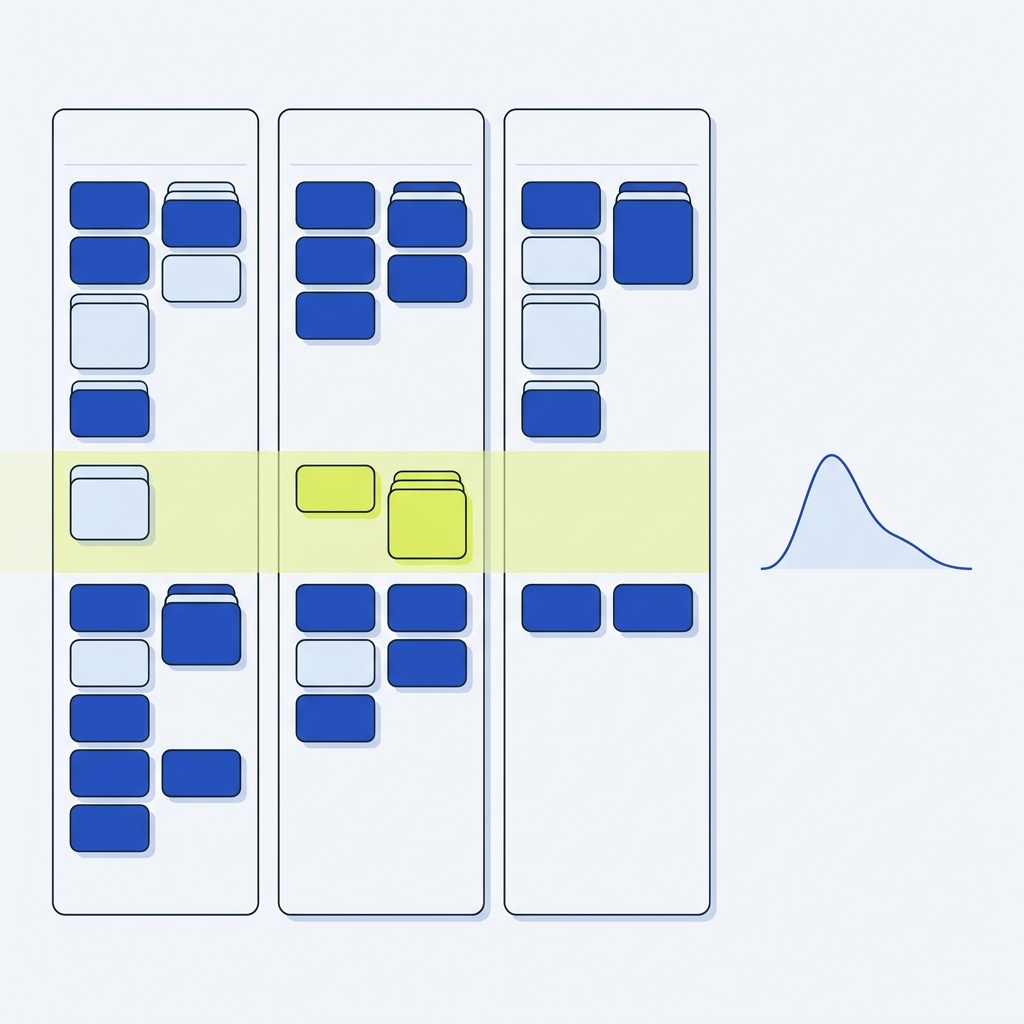
When introducing Portfolio Kanban, start with a lightweight board showing proposed, in flight, and closed initiatives, and add selection policies and WIP limits only after you have a steady stream of initiatives to manage. The portfolio board should make tradeoffs visible rather than create additional process bottlenecks Portfolio Kanban.
Common mistakes, quick checklist and next steps
Frequent mistakes include not setting WIP limits, using Kanban merely as a task list, and ignoring flow metrics. Those errors remove the advantages Kanban provides: stabilization of flow, clear feedback on capacity, and measurable improvements driven by data The Kanban Guide.
Starter checklist for small teams in their first month: 1) map your workflow to columns, 2) set a conservative WIP limit on In Progress, 3) agree a simple pull policy, 4) run a daily board-led standup, 5) measure cycle time and throughput for two weeks, 6) pick one small experiment based on the data The Kanban Guide.
Safe experiments include lowering a WIP limit by one, trying a single expedite class for truly urgent items, or publishing a simple SLE for a common request type. Run experiments for a few weeks, review metrics, and decide whether to keep the change or roll it back Service Delivery Principles.
Next steps: choose the board type that matches your scope, start with a minimal set of columns and policies, set WIP limits and measure cycle time and throughput. Use short review cadences to iterate on policies and keep the focus on improving flow rather than adding process overhead The Kanban Guide.
Frequently asked questions
How does Team Kanban differ from a simple task list?
Team Kanban maps workflow states, uses pull and WIP limits, and tracks cycle time and throughput, while a task list only records items to do.
What are classes of service in Service Kanban?
Classes of service are decision categories like expedite, fixed date, and standard that guide prioritization and when items may bypass normal queues.
When should an organization adopt Portfolio Kanban?
Adopt Portfolio Kanban when you need to manage multiple initiatives across teams, control portfolio WIP, and make tradeoffs visible at the investment level.
Choose the smallest board that solves the decision level you need: team, service, or portfolio. Start minimally, set a WIP limit, measure cycle time and throughput, and iterate with short reviews. Small, data driven experiments will reveal the best fit for your team without heavy upfront investment.
References
- https://www.atlassian.com/agile/kanban
- https://prokanban.org/the-kanban-guide/
- https://kanban.university/what-is-kanban/
- https://stackandmethod.com/articles/project-management-kanban-vs-to-do-list-downsides
- https://stackandmethod.com/guides/workflow-automation/
- https://stackandmethod.com/software/
- https://www.scaledagileframework.com/team-kanban/
- https://kanban.university/kanbans-service-delivery-principles/
- https://businessmap.io/kanban-resources/portfolio-kanban/what-is-portfolio-kanban
- https://www.scaledagileframework.com/portfolio-kanban/
- https://www.cprime.com/blog/the-portfolio-kanban-system-lean-portfolio-management/