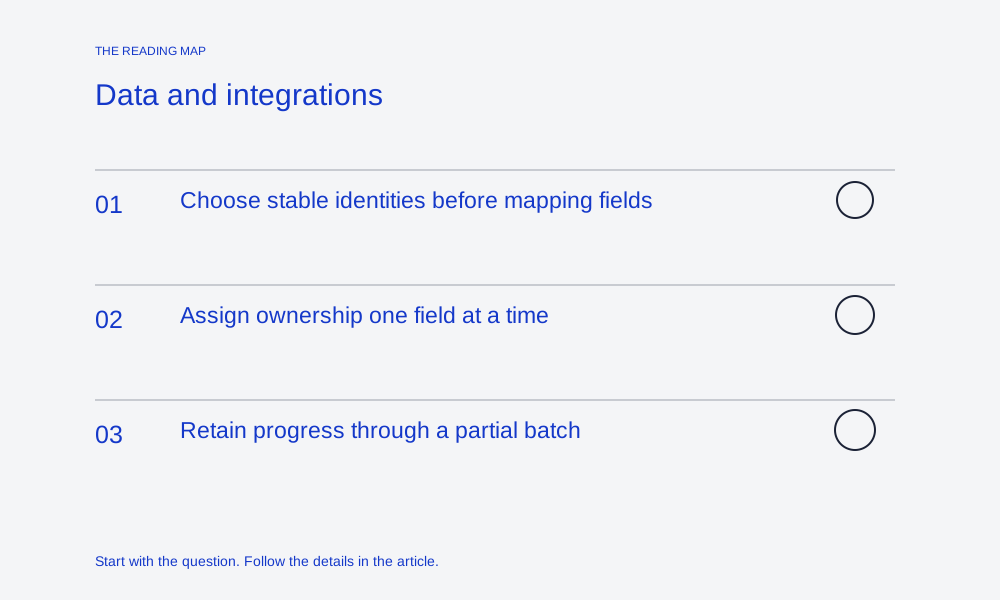

Choose stable identities before mapping fields
Write down the source identifier, destination identifier and how the pair is retained. A display title or email address can change and may not be unique. If no reliable identity exists, make that a design problem to resolve rather than compensating with a loose text match. Record the publication or tenant boundary alongside the identity when multiple destinations use the same integration.
Assign ownership one field at a time
A source system need not own every field on a destination record. Decide which fields are copied, calculated, locally edited or intentionally omitted. State what an empty value means: unknown, clear the field, or leave the destination unchanged. Keep that decision separate from deletion. A mapping table should make a conflict visible before a scheduled job overwrites someone’s work.
| Field | Authority and write rule |
|---|---|
| Article ID | Source identity; retained in the destination mapping. |
| Approved body | Copy only the approved source revision. |
| Local campaign note | Destination-owned; leave unchanged. |
| Canonical path | Apply the publication’s agreed URL rules. |
Retain progress through a partial batch
Define a checkpoint at a unit that can be explained and reconciled. If record three fails after the first two succeed, the recovery process needs to recognize those completed writes. A batch-level success flag is not enough to describe mixed results. Keep failed and unknown states distinct, and retain the source revision that produced each destination change.
Reconcile before declaring the systems aligned
Compare the fields the integration actually owns against a known source revision. Account for intended transformations instead of comparing raw objects blindly. An HTTP success or a matching record count does not prove that the mapped fields are correct. Decide how to surface discrepancies and who may resolve them; a reconciliation report should not silently choose new business values.
Keep these details together.
- Identifiers and field mappings
- Deletion and merge rules
- Reconciliation after partial failure