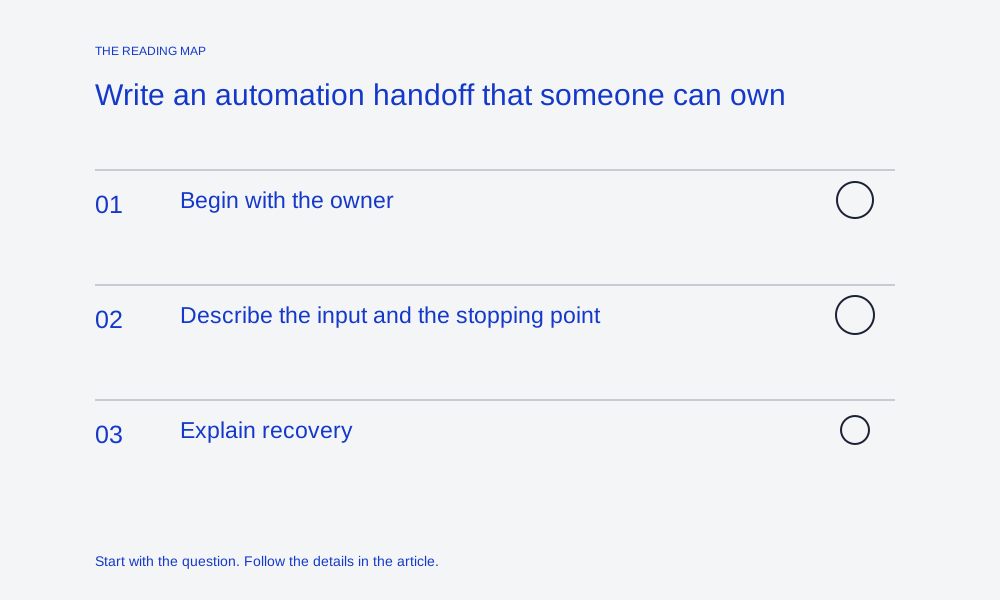

Begin with the owner
Name the person or role responsible for the result, the account that runs the workflow and the place where failures appear. A chat notification is only useful if someone is expected to act on it.
Describe the input and the stopping point
Give an example of a valid input and an invalid one, without real customer data. Say when processing should stop. Ambiguous records should not acquire invented values just to keep the automation moving.
Explain recovery
Document whether a run can be repeated, whether a destination may already have changed, and which record proves completion. Keep manual recovery steps close to the workflow rather than scattered across unrelated messages.
Make transfer practical
Record export formats, dependencies, credential names and permission requirements. Store secret values in the appropriate secret store, not in the handoff document. Rehearse the export with a small sample before making portability a selling point.
Record the plan, version, date, input set, output, failure behavior and billing units. A workflow diagram is a design pattern, not a benchmark.