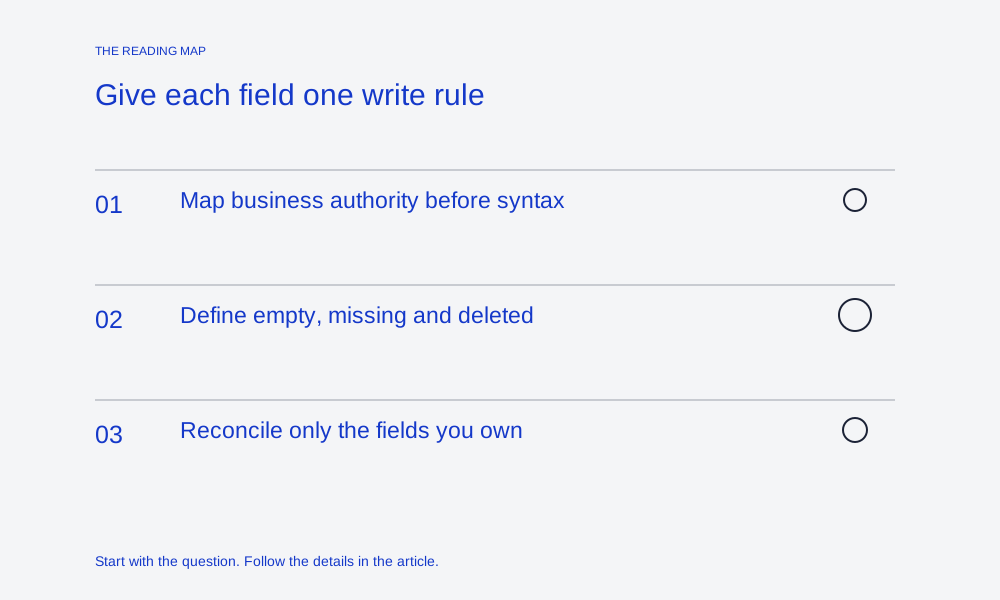

Map business authority before syntax
List the field’s meaning, authoritative source and destination behavior. Converting a date or renaming a JSON key is a transformation; deciding who may overwrite the publication title is an ownership decision. Keep those decisions in separate columns so a technical mapping cannot silently change editorial authority.
Define empty, missing and deleted
A missing source field might mean no update, while an explicit empty value might request clearing. Deletion can mean archive, detach or remove under the agreed business rule. Spell out each case. Do not let a default value stand in for a decision about what should happen to a real record.
Reconcile only the fields you own
Compare the destination against the expected transformed values for the retained source revision. Leave locally owned fields alone. When values conflict, show both the expected and observed states to the responsible owner. Avoid using a whole-object replacement merely because it is simpler to implement.
Keep the mapping with the asset
Store the mapping version, identifiers and dependency descriptions with the publication’s exportable records. Keep secret values elsewhere. A buyer or new maintainer should be able to understand how the site’s records were produced without receiving sibling-site data.
| Column | Purpose |
|---|---|
| Identity | Stable source and destination record keys. |
| Authority | Who owns the business value. |
| Transformation | How the approved value becomes the destination value. |
| Empty rule | Leave, clear, reject or another explicit behavior. |
| Verification | What is compared after the write. |
Record the plan, version, date, input set, output, failure behavior and billing units. A workflow diagram is a design pattern, not a benchmark.