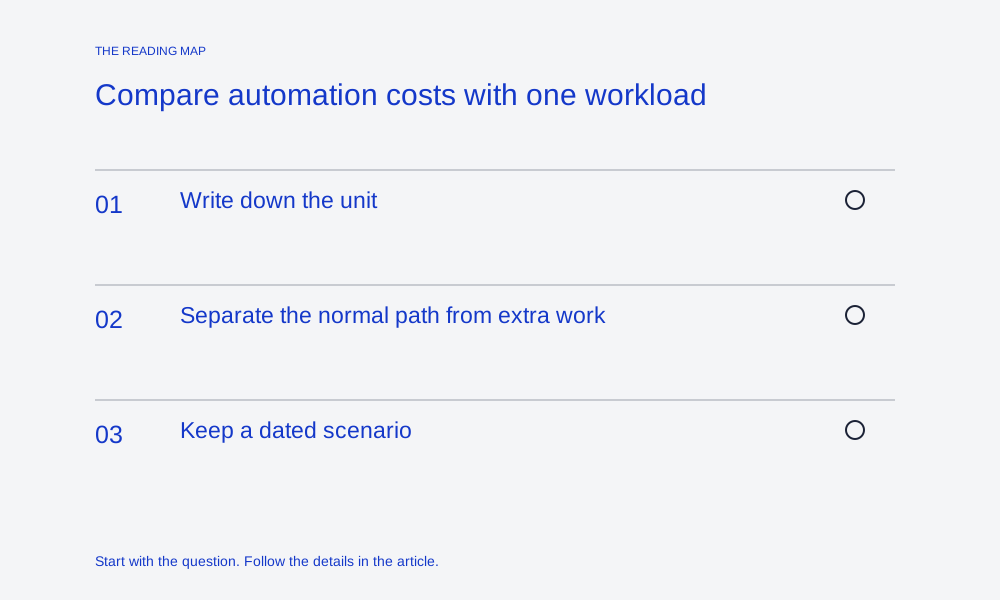
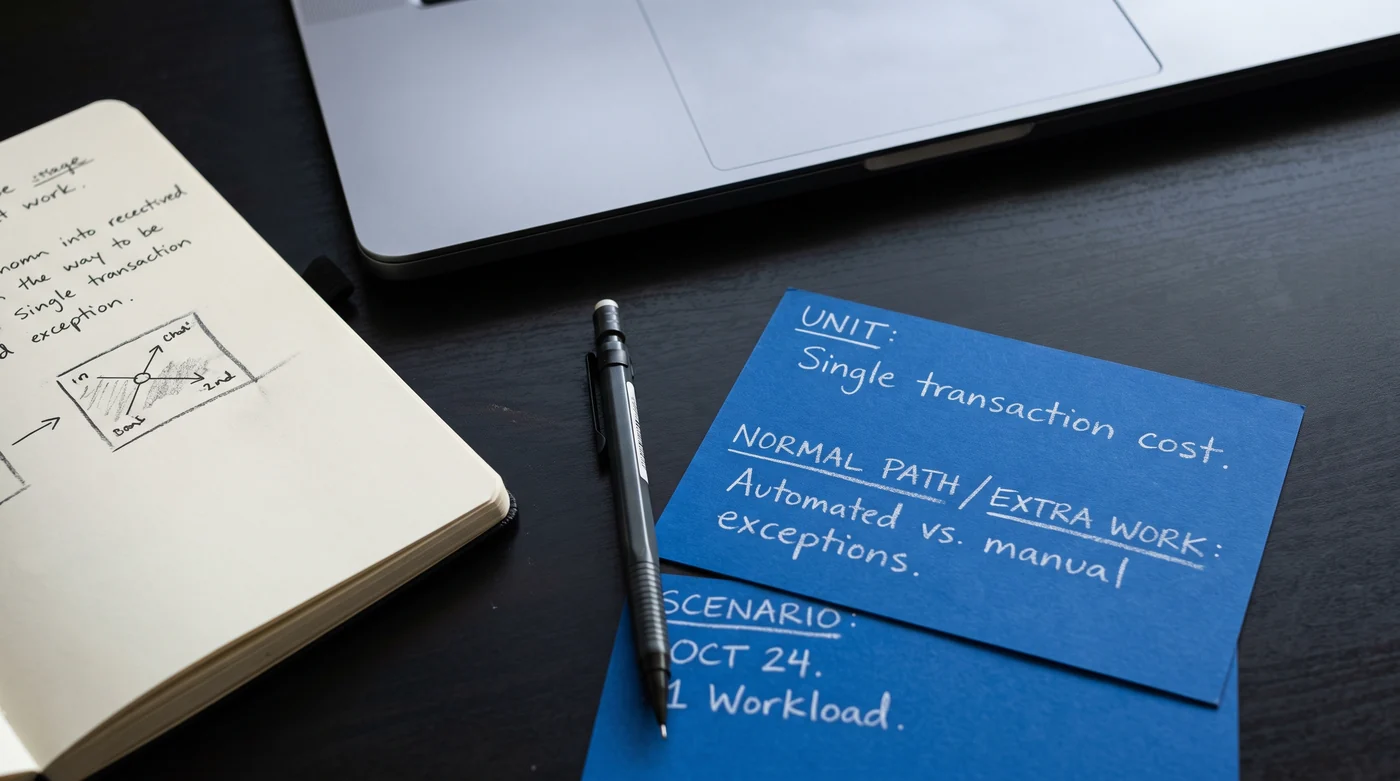
Write down the unit
One provider may bill for individual actions, another for executions, and another for compute time. Read the plan definition and model that unit. In our planner, units per run is an input you supply; it is not a claim about a vendor.
Make: credits ↗ — Make distinguishes credits from operations; some features have variable credit use. Read the current plan and feature rules.
Separate the normal path from extra work
A successful run may contain several paid steps. Polling, retries, branches and external services can add usage. Our simple estimate applies the retry allowance to the normal unit count; replace it with observed billing when failures only repeat part of the workflow.
Keep a dated scenario
Save the workload, included allowance, incremental overage price and external-cost assumption together. The arithmetic assumes a flat base and linear overage. It does not model tier jumps, annual commitments, taxes, seats or hard stops. A plan with a hard limit may stop processing instead of charging the estimated overage.
Compare ownership as well
Include the time to maintain mappings, rotate credentials, review failures and move the workflow. These are separate decisions from the calculator total. A lower software bill can still leave an expensive operational responsibility.
Record the plan, version, date, input set, output, failure behavior and billing units. A workflow diagram is a design pattern, not a benchmark.