
The journal
What are the differences between REST APIs and webhooks? A practical guide
webhook vs api integration explained for small teams, with standards, security and a practical checklist to choose push or pull.
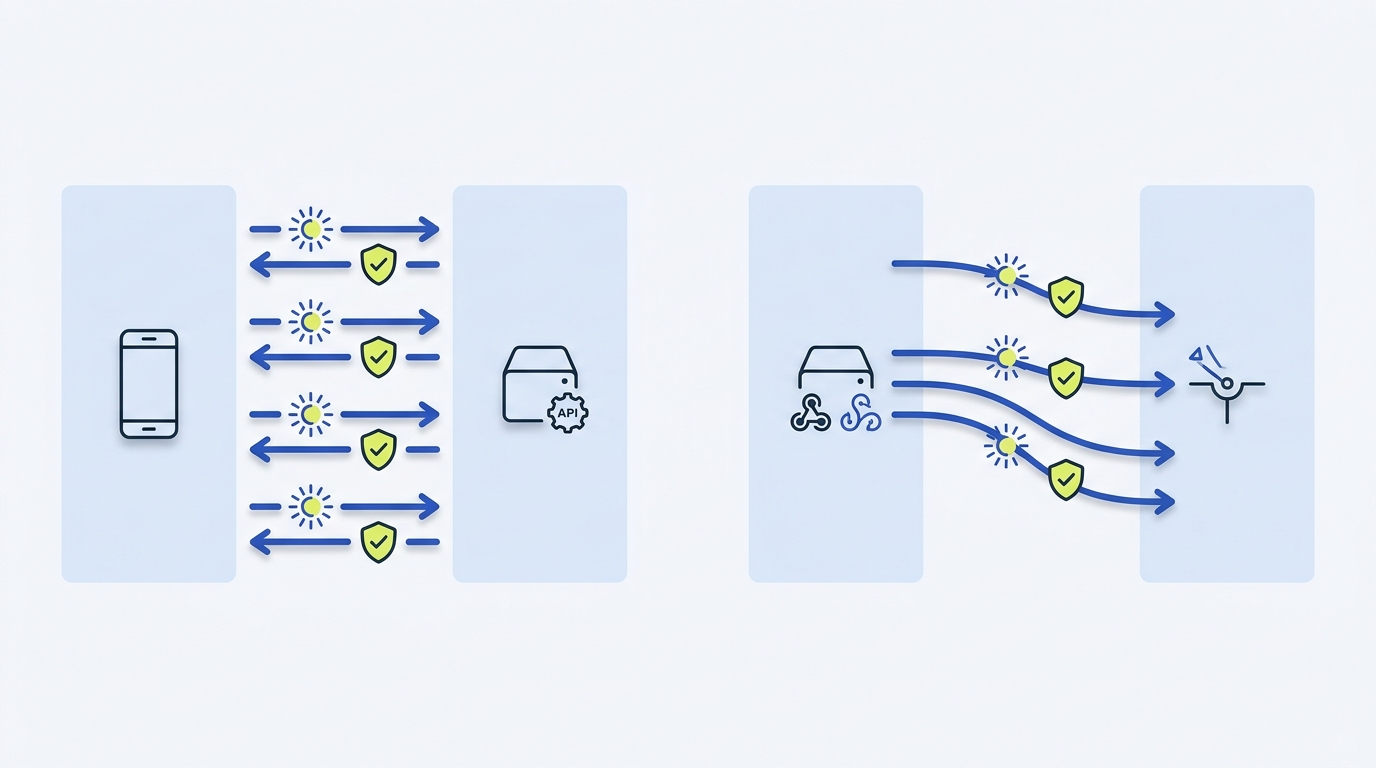
Quick answer: the core difference in one paragraph
At a high level, REST APIs and webhooks solve different integration problems: REST APIs use client initiated HTTP request and response interactions where the caller pulls data or invokes actions, while webhooks are provider initiated, event driven HTTP callbacks that push notifications to a subscriber endpoint. The choice is essentially pull versus push, and each model fits different latency and control requirements; the general models and status code guidance are described by HTTP Semantics for request driven interactions and by publish subscribe recommendations like WebSub for callback delivery.
How REST APIs work in practice: request, response and client control
Typical call flows
In a REST style integration the client makes an HTTP request, the server returns a synchronous response, and the client controls when data is fetched or an action is invoked. This flow is well suited for ad hoc queries, pagination, and operations where the caller needs a fresh, on demand view of state; for general HTTP behavior and status semantics see HTTP Semantics.

Typical patterns include GET for reads, POST for creating resources, PUT or PATCH for updates, and structured responses for errors and metadata. When reads are occasional or the client can tolerate polling delays, REST is straightforward: the client schedules requests and handles responses in code that the team already hosts and monitors.
Error handling and retries
When a client issues a write that might be retried, servers should support safe retries using an Idempotency Key header so repeated requests do not create duplicate side effects; the Idempotency Key approach lets clients retry reliably after network errors or server failures.
Servers and clients also rely on standard HTTP status codes and headers like Retry After to communicate rate limits and suggested backoff behavior, and machine readable error objects make automated handling more robust; a consistent error object format improves client parsing and recovery strategies.

How webhooks work in practice: events, delivery and verification
Event publishing and subscriber endpoints
Webhooks use a provider initiated callback: when an event occurs the provider makes an HTTP request to a subscriber endpoint the team controls, delivering event details without a prior poll by the receiver. This push model removes the need for frequent polling when near real time updates are required and reduces load on the provider because events are sent only when they happen.
Many teams formalize webhook payloads using CloudEvents so that metadata like id, source, type and time are consistent across providers and consumers, and CloudEvents supports both structured and binary payload modes to fit different delivery preferences.
What are the core differences between REST APIs and webhooks?
REST APIs are client initiated pull requests over HTTP, giving the client control over when data is fetched or actions are performed, while webhooks are provider initiated push callbacks that deliver event notifications to a subscriber endpoint, offering near real time updates with different operational tradeoffs.
Subscription lifecycle typically starts with a subscription request or manual configuration, then the provider will attempt deliveries to the subscriber endpoint, applying provider specific retry schedules and status checks until the event is accepted or a subscription is suspended. For publish subscribe patterns over HTTP, WebSub provides a reference implementation of this approach and explains common callback behaviors.
Because the provider initiates requests, subscribers must expose a reachable endpoint and implement verification and security checks to ensure events are authentic and to handle replay or duplicate deliveries.
Delivery guarantees, retries and common patterns
Providers commonly retry failed deliveries using exponential backoff or fixed schedules that are not mandated by base specs, so subscribers should be idempotent or able to detect and ignore duplicates when necessary. Retry and backoff guidance draws on HTTP status semantics for transient errors and Retry After timing when available.
To verify authenticity, teams often use HTTP Message Signatures so the subscriber can confirm the request was sent by the provider and that the payload was not altered in transit; signing is a practical control for webhook security and integrity.
Standards, security and reliability: combining best practices
Standards from 2023 and 2024 make it easier to build reliable integrations by combining well defined event formats, signed deliveries, and safer retry semantics. For event payloads CloudEvents standardizes the metadata and payload modes to increase interoperability between different tools and services.
HTTP Message Signatures provide a standard way to sign webhook deliveries so the receiver can verify integrity and origin of the message, which reduces the risk of accepting forged callbacks.
For REST write operations the Idempotency Key header gives clients a practical mechanism to retry without causing duplicate side effects, and standardized error objects let clients programmatically understand and act on failures; these standards work together without prescribing exact provider retry schedules.
Finally, teams should use Retry After and conventional HTTP status codes to implement backoff and error handling uniformly for both pull and push flows so retries and throttling behave predictably across integrations.
Decision checklist: when to choose REST API or webhooks for an integration
webhook vs api integration: Latency, control and complexity tradeoffs
Start by asking if you need near real time updates. If low latency is essential and you can host a stable endpoint, a webhook push model usually lowers end to end delay. If you need strict control over when data is fetched, or you cannot reliably host a public endpoint, a REST pull model is a safer choice.
Consider number of subscribers and event volume. A small number of subscribers receiving occasional events is a great fit for webhooks. If you have many consumers or complex queries over state, REST endpoints or a hybrid approach where one service exposes a REST API and emits webhooks for events may be easier to operate.
Operational cost matters. Webhooks require hosting reachable endpoints, signing and verification logic, and replay testing. REST requires request orchestration, rate limit handling, and polling costs. For most small teams a hybrid: REST for queries and writes, webhooks for near real time notifications, provides a practical balance.
Ownership, errors and recovery
Decide who owns retries and failure modes. If the provider controls retries and the subscriber must be idempotent, document expected retry behavior in your integration tests. If the client controls retries for writes, require Idempotency Key handling on the server side to prevent duplication.
Document SLAs, expected retry schedules and error formats as part of your integration contract so both sides have a clear operational playbook; these operational specifics are provider defined and are not imposed by the base standards, so they should be tested and agreed before production use.
Common mistakes and pitfalls teams make
Errors that cause duplication or missed events
A frequent pitfall is not making write endpoints idempotent, which can create duplicate records when clients retry after transient failures. Requiring and honoring an Idempotency Key is a direct standard based remedy for this problem.
Another common error is ignoring provider retry behavior and assuming a single failed delivery equals event loss; providers often retry on their own schedule, so design subscribers to accept duplicate deliveries and to reconcile state as needed.
Security and testing oversights
Teams also sometimes accept webhook requests without verifying signatures, which makes integrations vulnerable to spoofed callbacks; using a standardized signing method protects integrity and origin of messages. Additionally, not exercising replay tests and lacking observability leads to silent delivery gaps that only show up in production.
Simple operational fixes include adding signature verification, using CloudEvents to normalize payload metadata, logging raw deliveries for replay testing, and exposing metrics that alert when delivery success rates fall below an agreed threshold.
Practical examples and a small-team implementation checklist
Example: subscribing to events with CloudEvents and verifying signatures
Minimal webhook subscriber flow: accept an HTTP POST, parse CloudEvents metadata like id and type to route processing, verify the HTTP Message Signature header to confirm origin, then acknowledge success with a 2xx response. If verification fails, respond with a 4xx and log the event for investigation; using a standardized signature scheme makes verification deterministic.
For teams using CloudEvents, include the event id and source in logs and use the id to detect duplicates on replay. If a provider adds structured CloudEvents fields you can use those fields to correlate events to internal objects without relying on message body heuristics.
Example: safe REST write with Idempotency-Key
Minimal REST write flow: the client generates an Idempotency Key for the operation and includes it in the request header, the server records the key with the resulting resource or outcome, and the server returns a consistent response for repeated requests with the same key. On error, the client can safely retry without risking duplicate side effects when the server honors the idempotency contract.
When writes fail, returning a Problem Details object helps clients decide if the error is recoverable or permanent; problem details give a machine readable structure that the client can parse and act on automatically.
Deployment and monitoring checklist
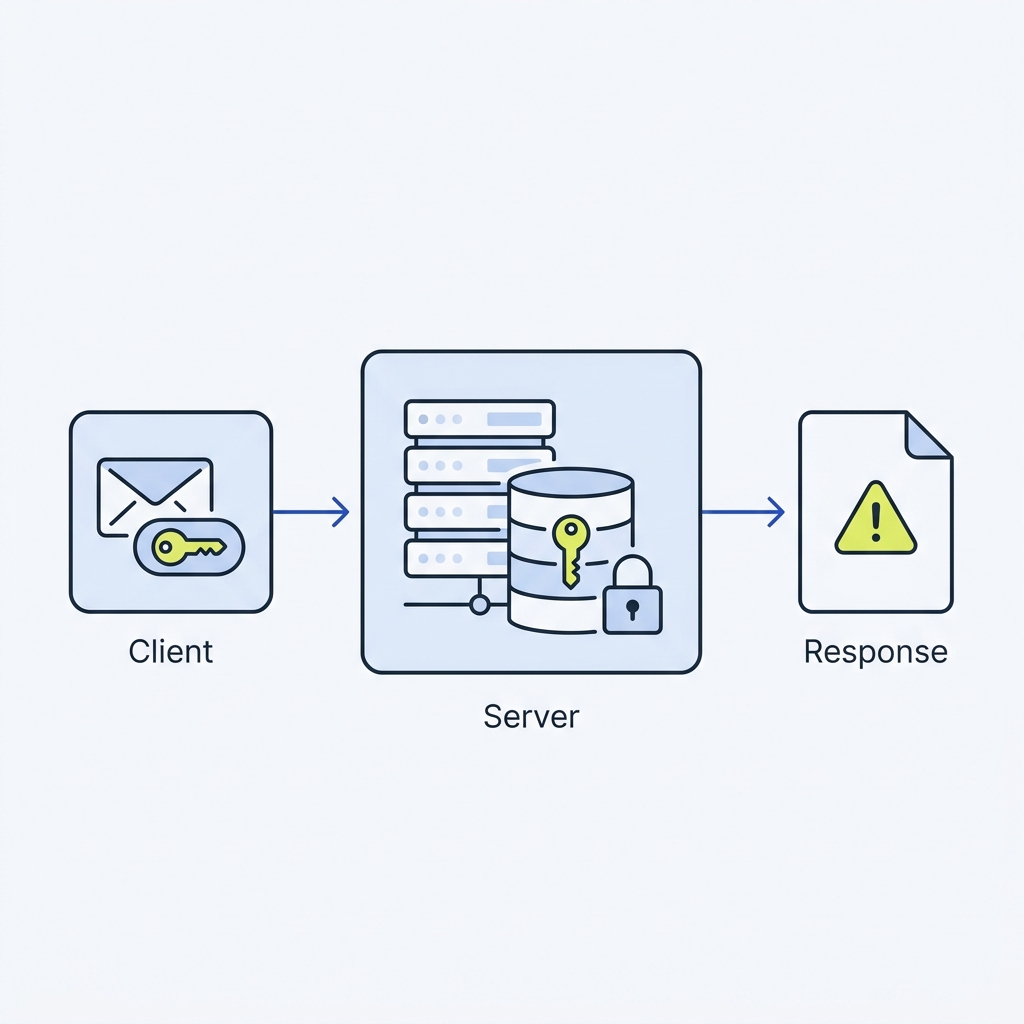
Deploy endpoints behind HTTPS, enable signature verification for incoming webhooks, and instrument request metrics and logs so you can track delivery success rates and response latencies. Test replay by replaying recorded deliveries against a staging endpoint and verify de duplication logic works as expected.
For REST endpoints, require Idempotency Key handling for any operation that can be retried, return Problem Details for errors, and use Retry After for transient throttling so clients can back off gracefully. Always include integration tests that exercise provider retry behavior because exact retry timing is provider specific and must be validated in your environment.
Tools to validate webhook signatures and produce CloudEvents
Frequently asked questions
Can I use both REST APIs and webhooks in the same integration?
Yes. A common pattern is REST for queries and writes and webhooks for near real time notifications; document retry and error handling for each part of the integration.
How do I avoid duplicate processing of webhook deliveries?
Design the subscriber to detect duplicates using an event id or dedupe store, and verify signatures before processing so replayed or forged requests are ignored.
When should I require Idempotency Key for REST requests?
Require an Idempotency Key for any write operation where retries could cause duplicate side effects, and persist keys and outcomes server side so repeated requests return the same result.
Choose the simplest pattern that satisfies latency and operational constraints, and use the standards described here to make integrations predictable and testable. Test your provider specific retry behavior, document it in integration tests, and iterate on observability so problems are seen before they impact users.
References
- https://n8n.io/pricing/
- https://github.com/cloudevents/spec/blob/main/cloudevents/primer.md
- https://learn.microsoft.com/en-us/azure/event-grid/end-point-validation-cloud-events-schema
- https://www.hackerone.com/blog/securely-signing-webhooks-best-practices-your-application
- https://stackandmethod.com/guides/data-integrations/
- https://stackandmethod.com/guides/workflow-automation/
- https://stackandmethod.com/software/n8n/
Verify the page produced by your integration
A successful API response or webhook acknowledgement tells you that a system accepted work. It does not establish that the final article is live, indexable or correctly marked up. After deployment, request the canonical page, compare its content and revision, inspect its indexing directives and parse the emitted JSON-LD.
My AI Search Report’s repeatable article publishing checklist walks through that boundary from accepted payload to verified live output. Its website readiness audit provides a bounded public-page summary; use a dedicated inspector such as CheckMySchema for deeper structured-data checks.
These are separate Orvus network projects. An audit or successful publication does not guarantee indexing, search ranking or an AI citation.